

Dim Sum Raves Aim to Revive Hong Kong's Appeal
By Reuters | 11 May, 2026
Lin Heung Lau, a century-old teahouse in Hong Kong's central financial district, draws younger customers with tea-flavoured alcohol, dumplings and electronic music.
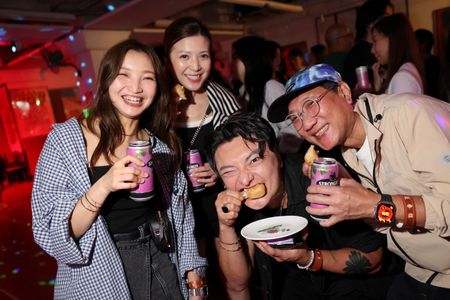
Customers pose for photos while holding dim sums at Lin Heung Lau teahouse during its farewell dim sum rave party ahead of its relocation from Central, in Hong Kong, China, May 9, 2026. REUTERS/Tyrone Siu
A century-old teahouse in Hong Kong's central financial district is hosting "dim sum raves" to draw younger customers with tea-flavoured alcohol, dumplings and electronic music.
Lin Heung Lau teahouse first opened in Hong Kong in the 1920s.
A customer receives roast meats at Lin Heung Lau teahouse during its farewell dim sum rave party ahead of its relocation from Central, in Hong Kong, China, May 9, 2026. REUTERS/Tyrone Siu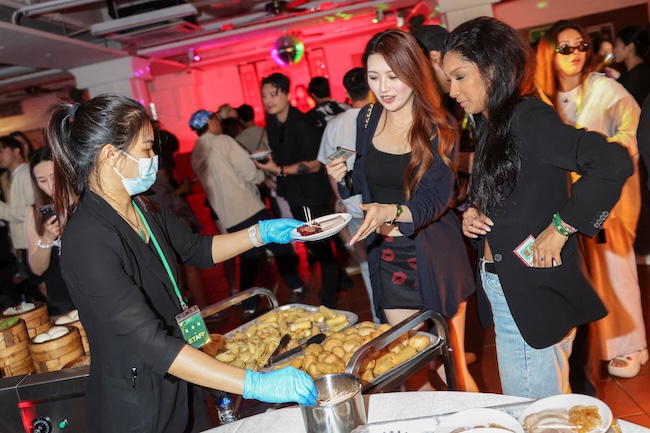
The restaurant is famous for its traditional trolley table service where diners choose delicacies including prawn dumplings and barbecued pork buns from steaming bamboo baskets.
On Saturday night, the teahouse transformed into a nightclub with a large sparkling disco ball, strobe lighting and a DJ playing electronic and Cantonese music for 300 partygoers from Gen Z to people in their 40s and 50s.
A chef slices roast meats at the historic Lin Heung Lau teahouse during its farewell dim sum rave party ahead of its relocation from Central, in Hong Kong, China, May 9, 2026. REUTERS/Tyrone Siu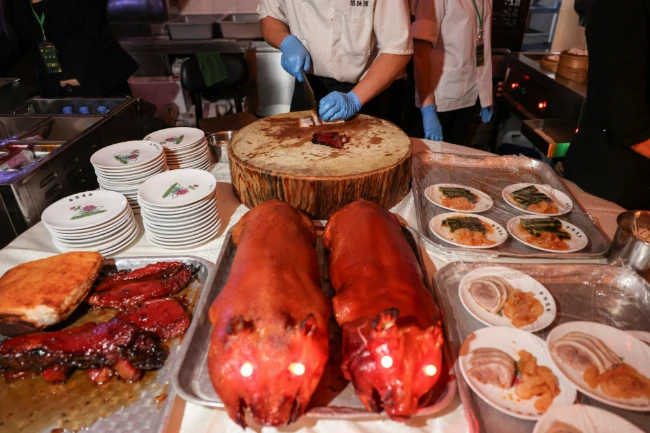
"I think what's most special is that there are shrimp dumplings, Siu Mai and a DJ spinning records," said 30-year-old Luna Chan, who travelled from the neighbouring city of Macau for the event. Siu Mai are a popular type of steamed prawn and pork dumpling.
Hong Kong's retail and food and beverage outlets have struggled since the COVID pandemic, which hit tourism and accelerated a change in the way mainland Chinese visitors spent their money. Local residents are also heading across the border to mainland China where they can shop and eat more cheaply.
At least 14 restaurants have shut in the past four months, local media reported in April, including many long-established restaurants and catering chains.
"Everyone knows Hong Kong's economy has been in a downturn for the past few years but we rely on brand recognition to shine through," said Rocky Wong, chairman of Lin Heung Lau.
"Although many people travel north to mainland China every month, which we can't stop, having 47 million tourists coming to Hong Kong balances that out. We just focus on improving our brand and service," Wong said.
To maintain the restaurant's popularity, it had to keep trying new things such as the dim sum rave experience, he added.
Lin Heung Lau has three branches and, after closing its historic site in the city's Central district, reopened on Monday at a new location nearby. It hopes to stage the themed raves every month, tapping into a global Gen Z trend for parties that blend music with food, culture and wellness, including popular coffee raves and daytime parties.
(Writing by Farah Master; Editing by Kate Mayberry)
Recent Articles
- US Industry, Lawmakers Beseech Trump Not to Open to Chinese Cars at Summit
- China's Marriages Fall to Decade Low, Deepening Demographic Concerns
- Philippines Presidential Hopeful Sara Duterte Impeached, Awaits Senate Trial
- Trump-Xi Summit to Tackle Iran, Taiwan, Nukes, Trade, AI Rare Earths
- US Existing Home Sales Increased Less Than Expected in April
- Shein Accuses Temu of 'Industrial Scale' Copyright Infringement
- Fox Beats Q3 Revenue Estimates on Strong Ad Sales from News, Sports
- Hackers Use AI to Innovate Hacking Operations, Says Google
- Dim Sum Raves Aim to Revive Hong Kong's Appeal
- The Fastest Growing Asian American Communities Are in the South