

Walking Seems to Reduce Stroke Risk for Women
By wchung | 02 Apr, 2026
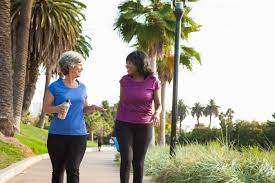
Women can lower their stroke risk by lacing up their sneakers and walking, a new study suggests.
Women who said they walked briskly had a 37 percent lower risk of stroke than those who didn’t walk. Women who reported walking at least two hours a week at any pace had a 30 percent lower risk, according to a study published online Tuesday in the American Heart Association journal Stroke.
While previous studies have shown that physical activity decreases the chances of having a stroke, the new study focused on what kind of exercise might be most beneficial for women.
“This certainly speaks to walking for a certain amount of time and walking briskly as well,” said Jacob Sattelmair, lead author of the study and a doctoral student at Harvard School of Public Health in Boston.
Those walking at a brisk pace should be able to talk — but not sing, he said.
The research involved about 39,000 female health workers 45 or older enrolled in the Women’s Health Study. The women were periodically asked about their physical activity. During 12 years of follow-up, 579 had strokes.
Besides walking, the study looked at vigorous activities like running, swimming and biking, but researchers didn’t find a link between those vigorous activities and a reduced stroke risk. The researcher said there may not have been enough women in that group to show a difference. It’s also possible, they said, that moderate activity is better at lowering blood pressure, a strong risk factor for stroke.
The researchers took into account age, aspirin use, smoking and other things that could influence stroke risk.
“I think what’s encouraging is that moderate activities are powerfully effective in reducing the risks of stroke,” said Dr. Anand Rohatgi, a cardiologist at the University of Texas Southwestern Medical Center in Dallas.
In addition to high blood pressure, risk factors for stroke include heart disease, Type 2 diabetes and obesity.
“The things that directly correlate with stroke are improved with physical activity,” Rohatgi said. “They all line up.”
Dr. Tracy Stevens, director of Saint Luke’s Muriel I. Kauffman Women’s Heart Center in Kansas City, Mo., said people can see the benefits of exercise by taking their blood pressure after exercising to see how much lower it is.
“It takes hard work,” she said, adding, “It doesn’t have to be anything fancy.”
The American Heart Association recommends that adults do 2½ hours a week of moderate-intensity or 75 minutes a week of vigorous aerobic activity or a combination.
JAMIE STENGLE, Associated Press Writer DALLAS
Articles
- Trump to Declare Victory on Prime Time
- NASA Launches First Crewed Mission in Half Century
- Intel CEO Lip-Bu Tan to Pump More Millions into AI Startup SambaNova
- Senator Andy Kim Rejects Democrats' "Straight White Christian Male" Strategy
- Why So Many More AF/WM couples than AM/WF Couples in the US?
- Trump Attends Supreme Court Hearing on Birthright Citizenship
- Nvidia's Dominance in China Erodes As Domestic Chipmakers Enjoy Bigger Share of AI Boom
- Tesla Car Registrations Soared in Key European Markets in Turnaround
- US Private Payrolls Continued Steady Growth in March Says ADP
- World Markets Rebounded Sharply on Quick Iran Peace Hopes