

Resynchronizing Implant Better at Preventing Heart Attacks
By wchung | 02 Apr, 2026
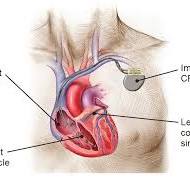
Boston Scientific said Tuesday a clinical study shows its heart resynchronization implant devices were better at preventing death or surgery due to heart failure than another popular type of device.
The Natick, Mass., company said patients implanted with the devices, which recoordinate the action of the right and left ventricles, were 29 percent less likely to die or need surgery than patients who had implantable cardioverter defibrillators.
ICDs are designed to restore a normal heart rhythm by delivering an electric shock.
Boston Scientific said the results show that early implantation of a cardiac resynchronization device can slow the progression of heart failure. The MADIT-CRT trial included more than 1,800 patients with class I or II heart failure, the two mildest types according to a New York Heart Association scale.
The company said about 70 percent of all U.S. heart failure patients have the class I or class II type. It estimated that 5.5 million people in the U.S. have heart failure.
In premarket trading, shares of Boston Scientific advanced 74 cents, or 8 percent, to $9.98.
6/23/2009 9:09 AM NEW YORK (AP)
Articles
- Investors See Trump Speech As Extending Hormuz Closure
- Sahra Nguyen Brought Vietnamese Coffee to America
- Trump to Declare Victory on Prime Time
- NASA Launches First Crewed Mission in Half Century
- Intel CEO Lip-Bu Tan to Pump More Millions into AI Startup SambaNova
- Senator Andy Kim Rejects Democrats' "Straight White Christian Male" Strategy
- Why So Many More AF/WM Couples than AM/WF Couples in the US?
- Trump Attends Supreme Court Hearing on Birthright Citizenship
- Nvidia's Dominance in China Erodes As Domestic Chipmakers Enjoy Bigger Share of AI Boom
- Tesla Car Registrations Soared in Key European Markets in Turnaround