

New Tariff on US Chipmakers
By Reuters | 26 Sep, 2025
In an effort to reduce the current high degree of US reliance on overseas chip production, a new Trump plan would force US chipmakers to pay tariffs on the amount by which overseas production exceeds domestic.
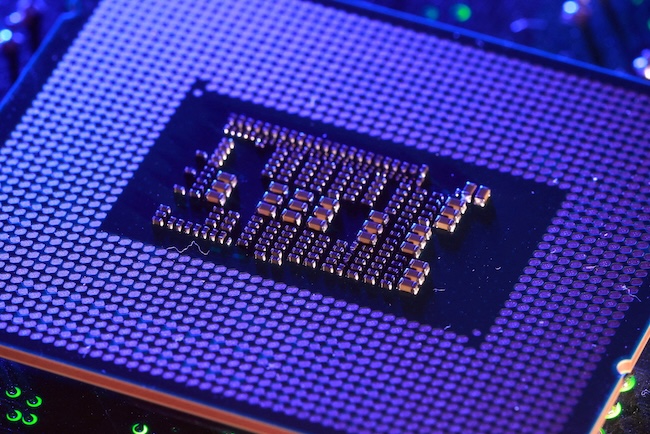
Computer motherboard and Intel chip appear in this illustration taken August 25, 2025. REUTERS/Dado Ruvic/Illustration/File Photo
The U.S. is planning to push chipmakers to match the volume of semiconductors that their customers currently import from overseas providers through domestic production, or pay a tariff, the Wall Street Journal reported on Friday.
President Donald Trump has doubled down on his efforts to reshore semiconductor manufacturing, offering exemptions from tariffs of roughly 100% on chips to firms that produce domestically.
Companies that fail to sustain a 1:1 domestic-to-import ratio over time would face tariffs, the Journal said.
U.S. Commerce Secretary Howard Lutnick floated the idea with semiconductor executives, telling them it might be necessary for economic security, the Journal said.
"America cannot be reliant on foreign imports for the semiconductor products that are essential for our national and economic security," the newspaper cited White House spokesperson Kush Desai as saying, who added that any reporting about policymaking should be treated as speculative, unless officially announced.
The White House and the U.S. Commerce Department did not immediately respond to Reuters' requests for comment.
Under the proposal, a company pledging to make chips in the U.S. would receive credit for that pledged volume, allowing imports without tariffs until the plant is complete, with initial relief to help ramp capacity, according to the report.
Trump's moves have spurred domestic and international companies to invest hundreds of billions of dollars in expanding U.S. manufacturing.
Shares of GlobalFoundries, the world's third-largest contract chipmaker, rose 10% in premarket trading.
The Malta, New York-based company, which has significant U.S. manufacturing capacity and a $16 billion investment plan including factory expansions in New York and Vermont, stands to benefit from efforts to boost domestic production.
(Reporting by Shivani Tanna and Ruchika Khanna in Bengaluru; additional reporting by Arsheeya Bajwa; Editing by Kate Mayberry, Stephen Coates and Tasim Zahid)
Recent Articles
- US Allies Eye Japan As Alternate Arms Supplier
- Korean Startup DEEPX, Hyundai Develop Chips for On-Device AI for Robots
- OpenAI GPT-5.4-Cyber Joins Anthropic Mythos in AI Cybersecurity Space
- US Home Coffee Consumption Highest in 14 Years
- Hock Tan Leaves Meta Board As It Extends Custom AI Chips Deal with Broadcom
- Erika Kirk Withdraws from Event with JD Vance, Presumably Over Threats
- Orban's Defeat Prompts Scrutiny of Trump-MAGA Links
- Day 1 of US Blockade Barely Affected Hormuz Shipping
- Musk's xAI Sued by NAACP for Illegally Polluting Gas Turbines
- Meet the MIT Lifer Who Invented the Battery Likely to Be in Your Next EV