

Is Blood-Typing Your Love Language?
By Goldsea Staff | 05 Feb, 2026
A majority of Japanese and Koreans vet potential dates and even colleagues through blood typing based on decades of anecdotal evidence despite lack of scientific validation.
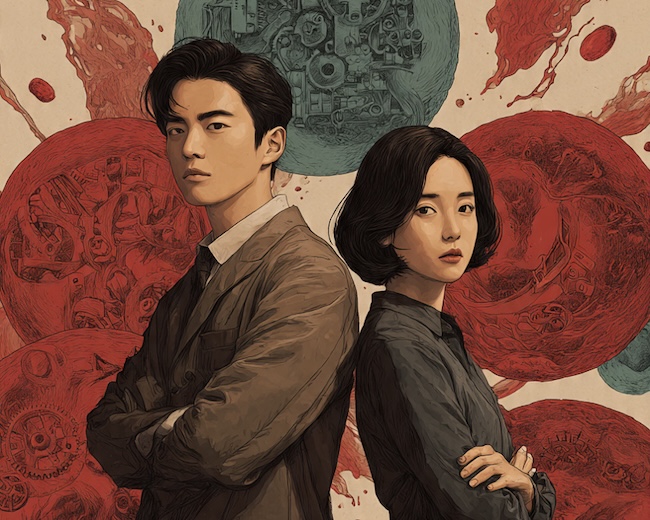
(Image by Meta)
Ever been on a date where someone asks your blood type right off the bat? If you're dating someone from Japan or Korea, that might not be as weird as it sounds. Blood-type personality theory is as popular as zodiac signs here, and are based on whether your blood is type A, B, AB, or O.
The subject pervades magazines, TV shows, dating apps, even some job interviews. As yet science has failed to find any significant correlation between blood type and personality or even physical traits, but a surprising number of Asians and Asian Americans use it to size up potential partners, friends, or coworkers the way other Americans might look to astrological signs.
So it may be helpful to be aware of what blood type tests claim about you, why they're lacking scientific backing, and why they stay around like a catchy pop song.
The concept got its start in Japan back in the 1920s. Professor Takeji Furukawa wrote a paper suggesting blood types could explain personality differences, maybe even racial traits, linked to some sketchy eugenics stuff from that era.
It lost currency until the 1970s when journalist Masahiko Nomi and his son Toshitaka cranked out bestselling books like "Understanding Affinity by Blood Type." Those sold millions, and suddenly blood typing was back in vogue.
The fad quickly hopped over to Korea, boosted by movies, songs, and TV dramas that played up the stereotypes for laughs and drama. Think of it as astrology meets biology, but without the stars—just your veins.
What Blood Types Say About You
It's straightforward, and honestly, kinda intriguing if you don't take it seriously as many people find a lot of anecdotal support for the theory from among their own acquaintances.
Let's break it down by type, starting with the basics that apply in both Japan and Korea. Keep in mind, these are generalizations, and they've got positive and negative spins, just like horoscopes.
Type A: Organized and Reliable Supporters
Type A folks are pegged as the reliable ones, the perfectionists who keep everything organized, show up on time, and hate conflict. They're seen as kind, considerate, and great listeners—basically, the friends who remember your birthday and bring soup when you're sick.
The downside is they can come off as anxious, indecisive, or too sensitive, always overthinking to avoid rocking the boat. In Japan Type As are often hailed as the "ideal" team players, fitting right into that group-harmony vibe the culture loves. Over in Korea a bit more shade is thrown at Type A guys as being too soft or wishy-washy which turns off many women.
Type B: Creative and Flirty Optimists
Type B are stereotyped as creative, outgoing, and super flexible—artists or entrepreneurs who roll with the punches and come up with killer ideas on the fly. Optimistic, passionate, and fun to be around.
But they're also seen as selfish, moody, unreliable, and total flirts. In both countries Type Bs are called "playboys" or "my-pace" types who do things their way, no matter what. Japan has this term "bura-hara" for blood-type harassment, and Type Bs bear the brunt of it, like jokes about them being late or flaky. In Korea they have it even tougher in romance, with surveys showing women often ranking Type B men as the least desirable. About 30% think they're too self-centered to even consider as a partner.
Type AB: Talented but Eccentric Individualists
Type AB are rare, making ;less than 10% of the population in Japan and Korea. They're billed as the mysterious geniuses: rational, creative, calm under pressure, and super individualistic. They can think outside the box and handle chaos without freaking out.
But negatives? Eccentric, unpredictable, aloof, or even "two-faced"—hard to read, maybe a bit thrill-seeking or weird. In Japan, ABs get romanticized as unique or intellectual, but in Korea, they're often the least favored in dating polls, with people saying they're too odd or distant. It's like being the quirky character in a rom-com who nobody quite gets.
Type O: Straightforward Leaders
Finally, Type O: the confident leaders. Sociable, ambitious, optimistic, and practical—these are the folks who rally the group, make decisions, and seem well-rounded. Tolerant and strong, they're often seen as natural bosses or charmers.
Downsides? Stubborn, arrogant, or a tad simple-minded, maybe competitive to a fault. Both countries love Type Os; they're the most preferred in surveys, especially for dating. In Korea, only like 6% of women dislike them, and in Japan, they're viewed as great communicators who fit anywhere.
The stereotypes are similar between Japan and Korea because Korea basically imported the idea from Japan. But there are tweaks: Koreans amp up the dating angle, with apps and profiles listing blood types for compatibility checks—like Type A women with Type O men being the "perfect match."
Japan weaves it more into pop culture, with blood-type horoscopes on morning TV or products like Type B gum that's supposedly "chewy and flexible." And yeah, it affects real life: some companies in Japan have formed teams by blood type, like putting ABs on planning gigs, or sports teams tweaking training based on it. Even politicians have blamed slip-ups on their type— one minister said his resignation was 'cause he's Type B and impulsive.
Seeking Scientific Validation
The kicker is that studies have poked at the subject for decades and found no link between blood type and personality. Big surveys in Japan, like one with over 3,700 people, showed folks might self-report traits that match their type, but it's probably just the Barnum effect—vague descriptions that feel personal, like fortune cookies. Another one with DNA testing on 1,400 folks found nothing beyond what you'd expect from random chance.
Psychologists dismiss "correlations" as mere self-fulfilling prophecies: if you think Type Bs are flaky, you might act that way or notice it more in them. The scientific community calls it pseudoscience, plain and simple—no more real than phrenology, that old bumps-on-the-head personality stuff. Even in the West, where it's gaining a little traction, experts like those at Psych Central or BetterHelp say there's zero evidence.
Great Ice-Breaker
So why does it hang on like a bad habit? For starters, history plays a big role. In Japan, it tied into post-WWII rebuilding, giving people a way to understand differences in a super homogeneous society—98% ethnic Japanese, so blood type adds some "diversity" without getting too deep.
During the imperial era, it even got used for military training, grouping soldiers by type. In Korea, it blew up during economic boom times, aligning with that competitive culture where everyone's hustling for jobs, dates, and status. It's a quick hack to "read" people without awkward small talk.
Media Embrace
Media keeps the fire going. In Japan, it's in anime, manga, video games—you name it. Characters get blood types listed in profiles, and fans debate compatibility. Korea's got hit films like "My Boyfriend is Type B," which pokes fun but reinforces the tropes. Polls show about 99% of Japanese know their type, and over half in Korea believe it somewhat. It's commercial too: blood-type diets, baths, even condoms tailored to types. Who wouldn't buy into that for a laugh?
An Appealing Simplification
In high-stress societies like these, where work and social pressures are intense, it offers certainty. Am I compatible with this person? Check blood types! It's like a personality quiz on steroids—harmless fun that boosts self-reflection. Cognitive biases kick in: confirmation bias makes you spot matching traits, ignoring the misses.
And since it's not seen as harmful (mostly), why debunk it? Though there is pushback—discrimination against Type Bs has led to awareness campaigns, and younger folks treat it more like memes.
At the end of the day, blood-type personality tests are a quirky cultural relic, blending old pseudoscience with modern pop culture. They say more about society than science—how we crave easy labels in a complex world. Next time someone asks your blood type, play along and enjoy the banter. After all real compatibility is probably too complex to reduce to enjoyable social chatter.
© 2026 by Asian Media Group Inc.
Recent Articles
- 'I Love the Inflation,' Trump Says of Prices Rising Amid Iran War
- China's JUNO Neutrino Detector Advances Precision in Mass-Ordering Quest
- Only 11% of Europeans View US as Ally, Survey Shows
- BYD Will Be World's Biggest Automaker in 5 Years Says Its Chairman
- US Consumer Prices Increase at Fastest Pace in 3 Years
- Traders Keep Bets on Fed Rate Hike by October
- Drone Risks Keep World Cup Security Planners Frantic
- Bill Gates to Face Congress in Probe of Epstein Case Handling
- Musk’s xAI, SpaceX Hit with Class Action over Data Center ‘Nuisance’
- Downed Chopper Prompts US to Launch New Strikes on Iran