

GoldSea Streamers Guide to HBO MAX
By J. J. Ghosh | 05 May, 2026
Part three of our series assessing how streaming platforms are doing by us.
.webp)
I know I’m not alone in saying that HBO is home to most of my favorite TV shows.
The Wire, The Sopranos, Game of Thrones, the list goes on.
These are shows that I grew up watching. Which also means that I was a little young — and society a little less evolved — to be questioning the level of representation at the time.
Going back and looking at these shows through an AAPI-conscious lens admittedly makes it slightly harder to declare each a 10/10.
The Wire was excellent, if not truly ahead of its time, when it comes to Black representation. And Game of Thrones had some of the best female leads in TV history.
HBO's White Lotus season 3 featured strong Thai representation though generally not in leading roles.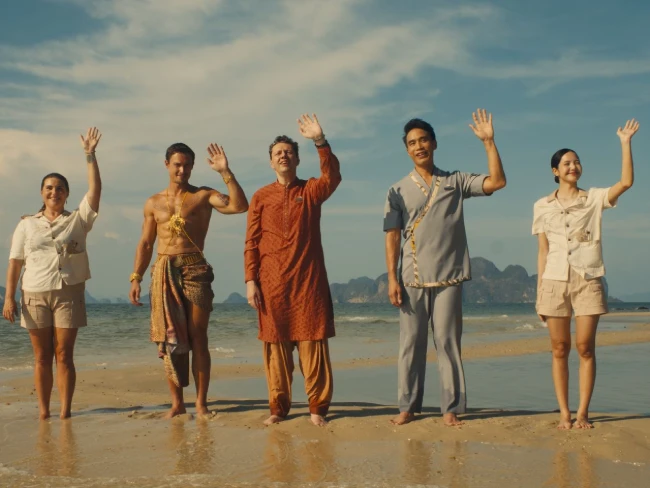
But I’m not sure the same can be said about their Asian American characters.
At the same time, the question should not simply be “How did they do decades ago?” It should be “How are they doing now?”
Let’s take a look.
The Content List
First and foremost, here’s a working list of the most significant AAPI content on HBO Max right now:
Series (HBO Originals):
The Sympathizer (2024) — The most ambitious AAPI-centered prestige drama on any American streaming platform. Vietnamese-led, Vietnamese-language, directed by Park Chan-wook. Essential.
The White Lotus Season 3 (2025) — Set in Thailand with a significant Thai supporting cast including Lisa from Blackpink. Gorgeous and complicated.
Song of the Samurai (upcoming) — A Japanese historical drama set in Kyoto at the end of the Edo period, following the Shinsengumi samurai force through spectacular action sequences. A Japanese production streaming on Max internationally.
Documentaries (HBO Originals):
The A List: 15 Stories from Asian and Pacific Diasporas (2025) — Debuts this month. AANHPI community portraits directed by Eugene Yi.
Tiger — The Woods documentary, which includes significant coverage of his Thai heritage through his mother Kultida.
Standup (HBO Originals):
Margarat Cho's 1994 stand-up comedy special was arguably ahead of its time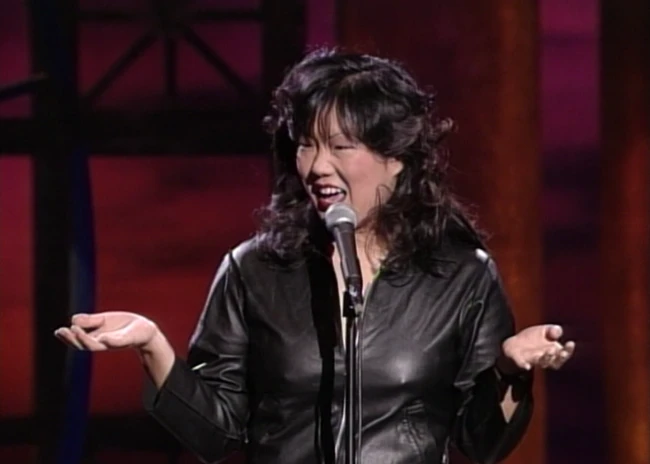
Atsuko Okatsuka: The Intruder (2022) — Okatsuka, who is Taiwanese-Japanese American, became the second Asian American woman to have a standup special on HBO with this debut. The New York Times named it Best Debut of 2022.
Margaret Cho: HBO Comedy Half-Hour (1994) — Historically significant as one of Cho’s earliest major platform appearances, before All-American Girl launched the same year. A library title worth knowing about.
Licensed/Library:
Warrior (2019–2023) — A Cinemax original acquired by HBO Max. Bruce Lee’s dream project, finally realized. A period epic set in San Francisco’s Chinatown with a predominantly Asian cast. Criminally underrated.
Crazy Rich Asians (2018) — Still the most commercially successful AAPI-led Hollywood film in recent memory.
See Us
To HBO’s credit, they — like Hulu and Apple TV — have a dedicated AAPI content hub. It’s called “Asian and Pacific Islander Voices,” and it has existed in various forms since 2021, when the platform launched a spotlight page called “See Us” in honor of AAPI Heritage Month following the Atlanta spa shootings. The original hub featured Warrior, Crazy Rich Asians, Life of Pi, House of Ho, and a range of documentaries and animated titles.
The hub has evolved since then, and the current collection is a reasonable starting point for AAPI viewers looking to find their footing on the platform. But like Apple’s hub, it leans on licensed content — films and series that HBO acquired rather than made.
The more revealing question, as always, is what HBO has actually produced.
The Crown Jewel: The Sympathizer
If Apple has Pachinko, HBO has The Sympathizer — and the two shows make for a fascinating comparison.
The Sympathizer is a limited series created by co-showrunners Park Chan-wook and Don McKellar, produced by A24, that premiered on HBO in April 2024. It follows a half-French, half-Vietnamese communist spy known as The Captain, who witnesses the fall of Saigon and finds himself in Los Angeles continuing to work covert operations for the Communist Party while embedded in a South Vietnamese refugee community.
A worldwide casting call was opened to find a main cast of Vietnamese descent, ultimately hiring Hoa Xuande, Fred Nguyen Khan, Toan Le, Vy Le, and Alan Trong. More than half of the dialogue is in Vietnamese. Sandra Oh, Kieu Chinh, and Nguyen Cao Ky Duyen appear in recurring roles alongside Robert Downey Jr., who plays several antagonistic American establishment figures.
The series received an 89% on Rotten Tomatoes, with critics praising its performances and direction. It received significant attention from the Vietnamese American community in California — younger viewers saw it as a long-overdue showcase of Vietnamese stories for a global audience, while some older viewers pushed back on the focus on a communist protagonist.
That last tension — the show’s willingness to tell a Vietnamese story from a Vietnamese communist’s perspective, told in Vietnamese, directed by a Korean auteur, produced by the most credibility-conferring indie studio in Hollywood, distributed by HBO — is itself the story.
This is exactly the kind of ambitious, uncomfortable, culturally specific content that the AAPI community has been asking for. And HBO made it.
The White Lotus
The third season of The White Lotus was, by almost any measure, the television event of early 2025.
Set at a wellness resort in Thailand and filmed in Bangkok, Phuket, and Ko Samui, it brought one of HBO’s most celebrated franchises to Asia for the first time — and with it, a significant Thai cast.
Lalisa Manobal — Lisa from the K-pop group Blackpink, one of the most famous people on the planet — played Mook, a health mentor for guests. Lek Patravadi, a legendary figure in Thai theater, played Siritala, one of the resort’s owners. Tayme Thapthimthong and Dom Hetrakul rounded out a Thai ensemble that brought real depth and local authenticity to the show’s world.
For many AAPI viewers, simply watching a prestige HBO production treat Thailand as something more than exotic backdrop — hiring actual Thai actors, filming on location, engaging seriously with Thai culture and Buddhist philosophy — was its own form of progress. The bar has been low enough for long enough that this felt meaningful.
Some critics, however, argued that the Thai characters ultimately remained in service of stories centered on wealthy Western protagonists, and that the season used Eastern spirituality as thematic texture rather than as a genuine window into Thai experience.
It’s a fair point, and worth sitting with. What’s also fair is that the show was gorgeous, the Thai cast was exceptional, and it introduced those actors to a global audience that had never seen them before.
Both things can be true.
Warrior: The Bruce Lee Dream Realized
In my opinion, the most underrated AAPI title in HBO’s library is one it didn’t originally make.
Warrior is a period crime drama set in 1870s San Francisco’s Chinatown, based on an original pitch by Bruce Lee — a show he intended to star in but was passed over for because of his race. Lee died in 1973 without seeing it made. Nearly fifty years later, his daughter Shannon Lee helped bring it to life, produced by Justin Lin, with Andrew Koji starring as Ah Sahm, a kung fu master who travels to America in search of his sister.
The show ran on Cinemax before landing on HBO Max, where it found a significantly larger audience. It is exceptional — a Gangs of New York-style epic with a predominantly Asian cast, rooted in a real and underreported chapter of American history, executed with the kind of craft and ambition that makes you wonder why it took Hollywood a century to get here.
The fact that it took Bruce Lee’s ghost pitching it from beyond the grave, his daughter fighting for it for decades, and a streaming platform desperate for content to finally make it happen is, of course, its own story about how the industry works.
The A List
Arriving on HBO this month is The A List: 15 Stories from Asian and Pacific Diasporas, a documentary directed by Eugene Yi that captures lived experiences from across the AANHPI communities in America — from celebrities like Sandra Oh to unsung heroes like Madelyn Yu, a retired nurse in New Jersey.
It features interviews with Connie Chung, Senator Tammy Duckworth, athlete Schuyler Bailar, and activist Amanda Nguyen, among others. The film is part of a larger series that previously produced The Black List, The Trans List, and The Latino List.
This is the kind of documentary content that Apple TV+ has almost none of and Hulu has too little of.
It’s not flashy. It doesn’t have a prestige showrunner attached. But it is exactly the kind of committed, community-centered nonfiction storytelling that signals a platform is thinking about AAPI viewers as more than an occasion for themed marketing.
The Standup Shelf
One area where HBO’s AAPI record is genuinely strong — and underacknowledged — is standup comedy.
The most significant recent entry is Atsuko Okatsuka: The Intruder (2022). Okatsuka, who is Taiwanese-Japanese American, became only the second Asian American woman to have a standup special on HBO. The New York Times named it the Best Debut of 2022.
Vulture listed it among the best comedy specials of the year. It is deeply personal, formally inventive, and one of the best standup specials of the decade — the kind of thing that deserves to be talked about in the same breath as the platform’s prestige drama output.
Further back in the library, Margaret Cho’s HBO Comedy Half-Hour (1994) remains historically significant — one of her earliest major platform appearances, arriving the same year All-American Girl premiered. It is a document of a moment when one Korean American comedian was doing something genuinely unprecedented on American television, and HBO gave her the room to do it.
The Verdict
HBO gets an A-.
The Sympathizer alone would merit serious consideration for any platform’s top grade — it’s the kind of show that the AAPI community has been waiting decades for, made with the budget and creative freedom that only a legacy prestige network can provide.
Warrior is extraordinary and deserves more credit than it gets. And the arrival of The A List suggests that HBO is thinking about documentary AAPI storytelling in a way that Hulu and Apple TV+ are not.
The White Lotus is also a genuine triumph, even if some of the criticism it received about centering Western protagonists in an Asian setting is worth acknowledging. Though it’s true that outside of those top titles, the bench thins faster than you’d hope from a platform with HBO’s resources.
What HBO has that neither Hulu nor Apple TV+ can match is proof of concept at the highest level. The Sympathizer is evidence that AAPI stories, told authentically, in the original language, with an AAPI cast, produced with A-list creative talent, can be prestige television.
The only question now is whether HBO treats that as a template or an outlier.
Next up: Netflix.
Recent Articles
- Chinese Foreign Minister Kicks off Meeting with Iranian Counterpart
- KOSPI Breaks 7,000 As Samsung Joins $1 Trillion Club
- China Services Growth Sped Up in April
- Trump Cites Deal Progress in Pausing Hormuz Ship Escorts
- Vox Momenti: Whereas I Love You, ...
- AI Is Writing Your Next Favorite Video Game
- Job Openings Fell in March but Hiring and Layoffs Surged
- Musk Wanted $80 Billion to Colonize Mars Testifies OpenAI President
- Nasdaq Hits Record on Surging AI Chip Stocks
- Anthropic's Deep Push into Finance Tasks Likely to Disrupt Software Sector