

Resynchronizing Implant Better at Preventing Heart Attacks
By wchung | 07 Jun, 2026
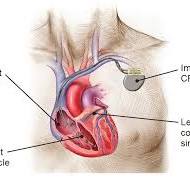
Boston Scientific said Tuesday a clinical study shows its heart resynchronization implant devices were better at preventing death or surgery due to heart failure than another popular type of device.
The Natick, Mass., company said patients implanted with the devices, which recoordinate the action of the right and left ventricles, were 29 percent less likely to die or need surgery than patients who had implantable cardioverter defibrillators.
ICDs are designed to restore a normal heart rhythm by delivering an electric shock.
Boston Scientific said the results show that early implantation of a cardiac resynchronization device can slow the progression of heart failure. The MADIT-CRT trial included more than 1,800 patients with class I or II heart failure, the two mildest types according to a New York Heart Association scale.
The company said about 70 percent of all U.S. heart failure patients have the class I or class II type. It estimated that 5.5 million people in the U.S. have heart failure.
In premarket trading, shares of Boston Scientific advanced 74 cents, or 8 percent, to $9.98.
6/23/2009 9:09 AM NEW YORK (AP)
Recent Articles
- OpenAI Plans ChatGPT 'Superapp' Overhaul Ahead of IPO
- Your Answers to These 7 Questions Will Reveal Whether You're Sane or a Closet Lunatic
- US Oil Companies Profit from Strait of Hormuz Closure Says Russian Oil CEO
- Trump Faces New Republican Resistance in Congress as Midterms Approach
- What Japan Gets Right About Everyday Life
- SpaceX IPO Already Two Times Oversubscribed
- SpaceX Signs Google As AI Compute Client After Landing Anthropic
- $1 Trillion in Stock Market Valuation Erased by AI Chip Selloff
- Anthropic Urges Industry Pause As AI Nears Recursive Self-Development
- Trump's South Lawn UFC Birthday Bash to Mix Politics with Punches